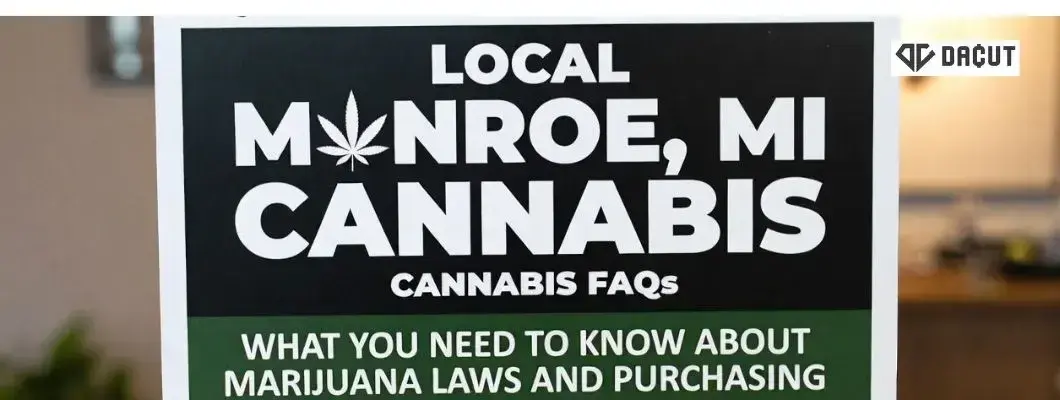
Local Cannabis FAQs in Monroe, MI
Monroe sits right along the Michigan-Ohio border, which means many visitors are either local residents or first-time buyers coming from nearby states....
READ MORE
Recreational cannabis is legal in Detroit, but the rules can be confusing for many. If you don’t know where you can use it, how much you can carry, or where you must buy it from. A simple mistake can make you face fines, marijuana license issues, or unnecessary hassle.
So, Detroit cannabis laws must be carefully understood by any consumers.
In this guide, we’ll explain how Michigan’s recreational cannabis laws apply in Detroit, who can legally buy, the limits on possession, and the rules for use at home or in public. We’ll also cover why licensed dispensaries matter and how to avoid common mistakes. By the end, you’ll know exactly how to stay compliant and confident as a cannabis consumer in Detroit, MI.
Detroit follows Michigan’s statewide recreational cannabis laws. However, the way those laws apply in daily life matters if you want to stay compliant. From who can legally use cannabis to where consumption is allowed, these rules shape how you buy, carry, and use marijuana in the city.
Below is a clear breakdown of what Detroit cannabis consumers need to know.
You can legally buy and use recreational cannabis in Detroit if you meet Michigan’s basic eligibility rules. These laws apply to both residents and visitors, as long as you follow the state’s age, possession, and use limits.
According to the Michigan Regulation and Taxation of Marihuana Act, recreational cannabis use is legal for adults who meet the required age and comply with possession and consumption rules set by state law. These regulations apply statewide, including Detroit, and are enforced by both city and state authorities.
To legally purchase, possess, or use recreational cannabis, you must be 21 years or older. As explained in the Marijuana in Michigan Guide published by the Michigan Marijuana Regulatory Agency, licensed dispensaries are required to verify your age using a valid, government-issued ID before completing any sale. If you are under 21, recreational cannabis possession or use remains illegal, even though marijuana is legal in Michigan.
Michigan law sets clear possession limits that Detroit consumers must follow.
According to the Michigan Regulation and Taxation of Marihuana Act, you may possess:
• Up to 2.5 ounces (71 g) of cannabis in public
• Up to 10 ounces (280 g) inside your home
Any amount over 2.5 ounces kept at home must be stored in a locked container. Exceeding these limits can result in fines or legal penalties, even if cannabis was purchased legally.
Home Grow Rules (Plants + Storage)
Detroit residents are allowed to grow cannabis at home, but only within state limits.
Under Michigan law, adults 21 and older may grow up to 12 cannabis plants per household for personal use. According to the Michigan Cannabis Regulatory Agency, these plants must be kept out of public view and stored in a secure area that is not accessible to minors.
If you grow more than the allowed number of plants or fail to store them properly, you could face penalties even if the grow is for personal use.
Where you use cannabis in Detroit matters just as much as how much you have.
According to the Michigan Cannabis Consumer Guide, recreational cannabis use is not allowed in public places. This includes sidewalks, parks, vehicles, workplaces, and most outdoor areas.
Cannabis use is generally allowed on private property, as long as the property owner permits it. However, landlords may still restrict use in rental properties.
Michigan law also allows licensed cannabis consumption lounges, where on-site use is permitted. Detroit regulates these establishments locally, and only properly licensed lounges can legally allow public consumption. Availability depends on city approvals and licensing status.
Buying cannabis in Detroit is legal. Selling it is regulated. That difference matters more than most people realize. Michigan law is clear about who can sell recreational cannabis and how those sales are taxed. Detroit then adds its own local rules on top.
If you want to stay compliant and avoid unnecessary risk, these are the rules you should understand before you buy or sell cannabis in the city.
In Detroit, recreational cannabis must be purchased from a state-licensed dispensary like Dacut dispensary, Jars and URB cannabis. Buying from street sellers, pop-up events, or unlicensed shops is still illegal, even though marijuana itself is legal.
According to the Michigan Cannabis Regulatory Agency, only businesses that hold an adult-use license issued by the state are allowed to sell recreational cannabis to consumers. Any sale outside that system is considered unlawful distribution, which can lead to fines or criminal penalties for both buyers and sellers.
This is why licensed dispensaries matter. They operate under testing, labeling, and safety rules that unlicensed sellers do not have to follow. For you as a consumer, that reduces legal risk and ensures the products you buy meet state standards.
In short, a Detroit recreational weed dispensary must be licensed under state law to sell quality cannabis products to adult consumers. All licensed dispensaries are required to follow strict testing, labeling, and safety regulations.
Beyond state licensing, cannabis businesses in Detroit must also comply with city-specific licensing rules.
According to the City of Detroit Office of Cannabis Affairs, Detroit limits the number of recreational cannabis licenses and gives priority to social equity applicants. These are individuals who were disproportionately impacted by past marijuana enforcement or who meet specific residency and income requirements set by the city.
This local system affects where dispensaries can operate, how many are allowed, and which businesses receive approval first. As a consumer, this explains why dispensary availability can vary by neighborhood and why not every cannabis business you see online is legally allowed to sell in Detroit.
Cannabis purchases in Detroit come with layered taxes that directly affect what you pay at checkout.
According to Flowhub’s Michigan cannabis law guide, recreational cannabis sales are subject to:
• A 10% excise tax on adult-use marijuan
• Michigan’s 6% sales tax
On top of that, Michigan introduced a 24% wholesale tax on recreational cannabis transfers to retailers, effective January 1, 2026. While this tax is charged at the wholesale level, industry analysts expect much of that cost to be passed on to consumers through higher retail prices.
For you, this means recreational cannabis in Detroit may cost more over time, even if the product itself doesn’t change. Understanding the tax structure helps explain price differences between medical and recreational cannabis and why licensed dispensaries price products the way they do.
Cannabis may be legal in Detroit, but driving after using it is not. Michigan treats impaired driving seriously, regardless of whether the impairment comes from alcohol, marijuana, or another substance. If you drive high, you risk criminal charges, license consequences, and long-term insurance problems.
Here’s how the rules work and why they matter for you.
DUI and Impaired Driving Rules
Driving under the influence of cannabis is illegal in Detroit and across Michigan.
According to the Michigan State Police, you can be charged with Operating While Intoxicated (OWI) if cannabis affects your ability to safely operate a vehicle. Michigan does not rely on a specific THC limit alone. Instead, officers look at driving behavior, physical signs of impairment, and field sobriety tests.
This means you can face OWI charges even if you consumed cannabis legally or purchased it from a licensed dispensary. Using marijuana in a vehicle, even as a passenger, can also create legal issues, especially if it contributes to impaired driving.
In short, legal cannabis does not give you permission to drive while impaired.
Driving under the influence of cannabis can have serious insurance consequences.
According to the National Highway Traffic Safety Administration (NHTSA), marijuana use can slow reaction time, affect lane control, and impair judgment, increasing the risk of crashes.
If you’re involved in an accident while impaired, insurance companies may:
• Deny or reduce claim payouts
• Increase your premiums significantly
• Treat the incident similarly to an alcohol-related DUI
In Michigan, an OWI conviction can also lead to license suspension or restrictions, which directly impacts your ability to stay insured or qualify for standard auto insurance rates. Even if no one is injured, the financial impact can last for years.
For your safety and your wallet, the safest choice is simple. If you use cannabis, do not drive.
Medical vs Recreational Cannabis
Michigan allows both medical and recreational cannabis. However, laws treat both differently. If you’re deciding which option makes more sense for you, it helps to understand how possession limits, taxes, and access differ under each system.
Key Differences in Possession, Taxes, and Access
The biggest difference starts with who qualifies. Recreational cannabis is available to anyone 21 or older, while medical cannabis requires registration through Michigan’s medical marijuana program.
According to the Michigan Medical Marijuana Program (MMMP), registered medical patients may qualify for higher possession limits and may also work with a registered caregiver, which is not allowed under recreational use.
Taxes also work differently. Recreational cannabis purchases are subject to a 10% excise tax plus Michigan’s 6% sales tax. Medical cannabis purchases, on the other hand, are typically exempt from the 10% excise tax, which often makes medical products more affordable for regular users.
Access is another key difference. Recreational dispensaries serve the general public, while medical dispensaries may offer:
• Stronger product options
• Medical-only product lines
• Priority access during shortages
For some Detroit consumers, recreational cannabis is enough. For others, especially those using cannabis frequently or for health-related reasons, a medical card may offer better pricing and flexibility.
Workplace, Housing, and Federal Rules
Even though recreational cannabis is legal in Detroit, that legality has limits. Your job, your housing situation, and federal law can still restrict when and where cannabis use is allowed. So you should understand these boundaries to avoid problems that state law does not protect you from.
Employer Drug Testing Policies
Michigan law allows employers to set their own workplace drug policies.
According to guidance from the Michigan Cannabis Regulatory Agency, recreational cannabis legalization does not require employers to permit marijuana use or impairment at work. Employers may still enforce drug-free workplace policies, conduct testing, and take disciplinary action if cannabis use violates company rules or affects job performance.
This means you can legally use cannabis on your own time and still face consequences at work if your employer prohibits it. Safety-sensitive jobs, driving roles, and federally regulated positions often have stricter enforcement.
Cannabis laws do not override private property rights.
According to the Michigan Cannabis Consumer Guide, landlords and property owners may prohibit cannabis use or cultivation on their property, even if marijuana is legal under state law. This includes smoking, vaping, or growing cannabis inside rental units.
If you rent in Detroit, always check your lease. Violating a no-cannabis policy can lead to warnings, fines, or eviction, regardless of state legalization
Cannabis remains illegal under federal law, even in states where recreational use is allowed.
According to the U.S. Department of Justice, marijuana is still classified as a controlled substance at the federal level. As a result:
• You cannot legally carry cannabis across state lines
• Cannabis is prohibited on federal property, including federal buildings, courthouses, and many airports
This matters for Detroit residents traveling through airports or near federal facilities. Even legally purchased cannabis can result in federal penalties if you bring it into restricted areas.
Common Mistakes to Avoid
Cannabis is legal in Detroit. However, many legal issues still come from small, avoidable mistakes. Most problems are not about intent. They happen because people misunderstand the rules or assume legalization means fewer consequences. Knowing these common errors helps you stay compliant and stress-free.
Over-Possession or Public Use
One of the most common mistakes is carrying too much cannabis or using it in the wrong place.
Possession limits still apply even if cannabis was legally purchased. Carrying more than the allowed public limit or failing to properly store cannabis at home can result in fines or penalties.
Public use is another frequent issue. As has been said, cannabis use is not allowed on sidewalks, parks, parking lots, or in vehicles. Even casual use outdoors can lead to citations. So, private property is usually considered the safest option, as long as the property owner allows it.
Driving Under the Influence
Another serious mistake is assuming that cannabis use and driving do not mix.
Driving while impaired by marijuana is treated the same as other impaired driving offenses. Officers do not need a specific THC number to issue an OWI. Observable impairment is enough.
Many drivers underestimate how long cannabis effects last. Even hours after use, reaction time and judgment can still be affected. If you plan to use cannabis, always arrange a ride and avoid driving altogether.
Buying from Unlicensed Sellers
Buying cannabis from unlicensed sellers remains illegal in Detroit.
Only state-licensed dispensaries are allowed to sell recreational cannabis. Street sales, delivery through unlicensed sources, and pop-up events are not protected under Michigan law.
Purchasing from unlicensed sellers can expose you to legal trouble and unsafe products. Licensed dispensaries are required to follow testing, labeling, and safety rules that protect you as a consumer.
So, you should always try to avoid these common mistakes and enjoy legal cannabis without unnecessary risk.
Do:
• Be 21 or older before buying or using recreational cannabis.
• Buy only from licensed dispensaries in Detroit.
• Carry no more than 2.5 ounces in public.
• Store up to 10 ounces at home in a locked container.
• Grow up to 12 plants per household, kept out of public view.
• Use cannabis on private property where it’s allowed.
• Check your lease and workplace policies before using cannabis.
• Plan a ride if you use cannabis. Do not drive afterward.
Don’t:
• Don’t use cannabis in public places like streets, parks, or vehicles.
• Don’t drive while impaired. Legal cannabis still leads to OWI charges.
• Don’t buy from unlicensed sellers or street sources.
• Don’t carry cannabis across state lines.
• Don’t bring cannabis onto federal property, including airports.
• Don’t assume legalization protects you from job or housing consequences.
Follow these basics, and you’ll stay compliant, avoid fines, and reduce unnecessary risk as a cannabis consumer in Detroit.
Detroit Recreational Cannabis Laws 2026 FAQs
Can anyone buy from a recreational dispensary in Michigan?
No. You must be 21 or older and show a valid, government-issued ID. This applies to Michigan residents and out-of-state visitors. You also must follow possession and use limits once you buy. Licensed dispensaries are required to verify age before completing any recreational cannabis sale. If you are under 21, purchasing or possessing recreational cannabis is still illegal.
No. Public cannabis use is not allowed in Detroit.
Michigan law prohibits using cannabis in public places such as sidewalks, parks, streets, vehicles, and most outdoor areas. Cannabis use is generally limited to private property where the owner allows it or to licensed consumption lounges once approved and operating under local rules. Public use can lead to citations or fines, even though cannabis is legal.