Powered by Buddy
Menu
Powered by Buddy
Powered by Buddy
Menu
Powered by Buddy
How do you want to shop?

Blogs
Are Edibles Better Than Smoking Weed

by Dacut | February 15, 2026
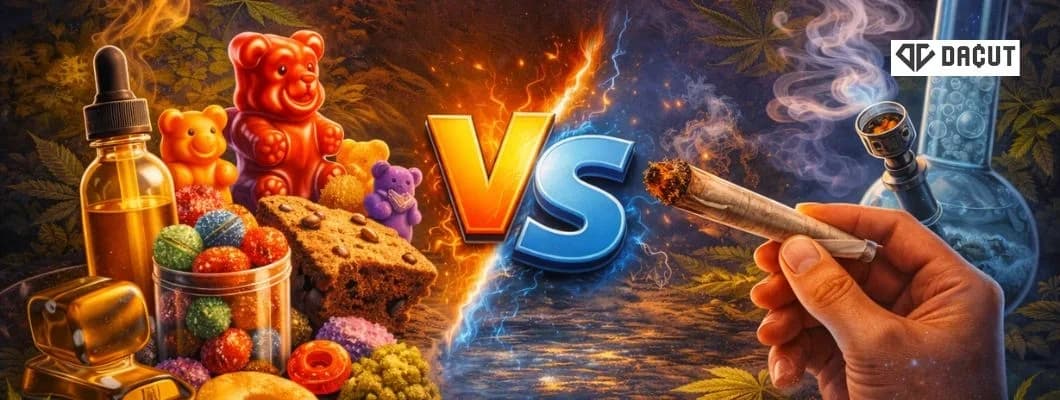
Are edibles better than smoking weed? Yes, it does work for many. However, there isn’t a single answer that works for everyone. Edibles and smoking affect the body in different ways, mainly because of how THC is absorbed and how quickly it reaches the brain through the blood. Smoking produces faster feedback. On the other hand, edibles take longer and often last longer due to metabolism in the liver.
In this article, we’ll explain how cannabis edibles and smoking compare, what makes each feel different, and how factors like dose, potency, and timing shape the experience, so you can choose what fits you best.
How Cannabis Affects the Body Depends on How You Use It
How cannabis affects you depends largely on how you take it. This means the consumption method (edibles vs. smoking) does matter when it comes to deciding which is better.
When you inhale smoke or vapor, THC (psychoactive compound in cannabis plants that produces “high”) moves from the lungs into the blood and reaches the brain within minutes, so effects appear fast and let you adjust the dose in real time.
When you eat a cannabis edible, the cannabinoids pass through the digestive tract and the liver, where Delta-9 THC is partly converted to 11-hydroxy-THC. That metabolite can feel stronger and lasts longer, which is why edibles take longer to kick in and have less predictable intensity.
Bioavailability and variability matter. Inhaled THC typically shows higher, quicker blood levels but varies with inhalation technique. Oral THC has lower and more delayed bioavailability, and onset depends on stomach contents, metabolism, and product formulation.
Practical result for users: inhalation gives immediate feedback and easier dose control. Edibles offer longer, often stronger effects but require patience and a conservative dose. Research on long-term health effects and cardiovascular outcomes is still evolving. So, you should still consider the key factors, including frequency and dose.
In the upcoming sections, we’ll address some crucial questions to help you decide which option is better for you: smoking cannabis flowers or simply consuming cannabis products.
Why Do Edibles Take Longer to Kick in Than Smoking?
The main reason edibles take longer to kick in is digestion. When cannabis is eaten, the cannabinoids must first travel through the stomach and intestines before reaching the liver. Only after this process do they enter the bloodstream and reach the brain.
This extra step slows everything down. Effects from edibles may begin anywhere from 30 minutes to a couple of hours after consumption, depending on factors like metabolism, body chemistry, and whether you’ve eaten recently. Because there’s no immediate feedback, it’s harder to tell when you’ve had enough.
Smoking works differently. Inhaled THC reaches the brain quickly, often within minutes, which makes the timing more predictable. That faster response allows users to stop or adjust sooner, while edibles require patience to avoid taking more than intended.
This difference in timing is one of the biggest reasons edibles can feel less predictable, especially for people who are new to cannabis.
If you’re new to cannabis and visiting a dispensary for the first time, be sure to ask your budtender how to take edibles and how much you should consume, so that you can properly track your dosage.
Which Gets You Higher: Edibles or Smoking?
“Higher” depends on timing and perception. Smoking delivers THC quickly, so the effects build fast and peak sooner. Edibles rise more slowly, but once they take hold, the experience can feel more immersive because THC is processed differently in the body. For some people, that delayed rise feels stronger simply because it lasts longer and unfolds gradually.
Are Edibles Stronger Than Smoking Weed?
Edibles are not automatically stronger, but they can feel stronger. When THC is metabolized in the liver, part of it becomes 11-hydroxy-THC, which crosses the brain more easily. That change can increase perceived potency, even if the dose is similar. Individual metabolism plays a big role, so effects vary from person to person.
How Long Do Edibles Last Compared to Smoking?
Duration is one of the clearest differences. Smoking typically produces effects that last a few hours (1 to 3 hours). Edibles often last much longer, sometimes most of the day (6 to 12 hours or more). That extended window can be useful for people who want longer effects, but it also means less flexibility once you’ve taken a dose.
Which Method Gives Better Dose Control and Feedback?
To put it plainly, smoking offers more immediate feedback. You feel the effects quickly and can stop when you reach a comfortable level. Edibles provide delayed feedback, which makes dose control harder, especially if you take more before the first dose has fully kicked in. For this reason, edibles work best with a lower starting dose and enough time to wait and assess how you feel.
Edibles vs Smoking Pros and Cons for Everyday Cannabis Users
For many cannabis users, the choice comes down to control, timing, and convenience. Here’s how edibles and smoking compare in everyday use.
Smoking cannabis:
Pros
• Effects appear quickly, usually within minutes
• Easier to adjust dose based on immediate feedback
• Shorter duration offers more flexibility
Cons
• Smoke can irritate the lungs and respiratory tract
• Smell may linger on clothes or indoors
• Effects wear off sooner than edibles
Cannabis edibles:
Pros
• No smoke or lung irritation
• More discreet, with little to no odor
• Longer-lasting effects for extended use
Cons
• Delayed onset makes timing less predictable
• Easier to overconsume without careful dosing
• Less flexibility once effects begin
Both options serve different needs. Smoking works well for users who want faster control, while edibles suit those who prefer longer effects and discretion.
Edibles vs Smoking: Smell, Coughing, and Irritation
One noticeable difference between edibles and smoking is how they affect the senses and airways. Smoking produces a distinct cannabis smell that can linger on clothing, hair, and in indoor spaces. It can also trigger coughing, throat irritation, or phlegm, especially for people with sensitive airways or frequent use.
Edibles do not produce smoke or vapor, so there is no odor during use and no direct irritation to the respiratory tract. For this reason, some people choose edibles to avoid coughing or lung discomfort. The trade-off is that any digestive discomfort or delayed effects happen internally and are not felt right away.
These differences are less about effectiveness and more about comfort and environment. Personal tolerance, frequency of use, and where you plan to consume cannabis often influence which option feels easier to manage.
Do Edibles Reduce Lung and Respiratory Risks Compared to Smoking?
When you smoke cannabis, the act of inhaling combusted plant material brings particles into the lungs and airways. Smoke from any plant matter can irritate the respiratory system, triggering coughing, throat irritation, or increased phlegm for some people. That irritation is tied to the physical act of smoking rather than the cannabinoids themselves.
Edibles bypass the lungs entirely. Because there’s no smoke or vapor to inhale, they remove the direct irritation that comes with combustion. Many people who prefer not to inhale smoke choose edibles for this reason.
Research on long-term lung health and cannabis smoke is still evolving. Some reports have found no conclusive link between occasional cannabis smoke and lung cancer, but smoke exposure can still affect the respiratory tract and may increase bronchitis-like symptoms in some users. Edibles sidestep that exposure, but they come with their own considerations around dosing and timing.
In this context, edibles may reduce smoke-related irritation for people who want to avoid coughing or respiratory discomfort. That doesn’t mean they are without effects, but they do eliminate the direct contact between smoke and lung tissue that comes with smoking.
Are Edibles Better for Your Heart Than Smoking Weed?
Many people wonder whether edibles are easier on the heart because they don’t involve smoke. It’s true that edibles avoid the lungs and the irritants that come with inhalation, but when it comes to cardiovascular function, the evidence so far doesn’t show a clear advantage for one method over the other.
Recent research has found that both smoked cannabis and THC edibles are linked with changes in the way blood vessels function, which is an early marker researchers use to understand potential heart strain. These findings don’t prove long-term outcomes, but they suggest that consuming cannabis in any form may affect the cardiovascular system and that frequency and dose matter when thinking about heart health.
What Research Says About Cannabis, Blood Flow, and the Heart
Emerging studies have looked at how chronic cannabis use, whether smoked or eaten, relates to the way blood vessels handle increased blood flow. A 2025 study published in JAMA Cardiology found that people who regularly used cannabis had reduced blood vessel function compared with non-users, a change similar to what’s seen in tobacco smokers. This reduced ability of vessels to dilate is considered an early sign of cardiovascular stress.
That same research also observed that habitual edible users showed similar changes in vascular function even though they didn’t inhale smoke, raising questions about how THC itself interacts with the cardiovascular system.
Other research has linked regular cannabis use with a higher likelihood of heart attack and stroke, particularly in observational studies where frequency of use was high. These kinds of studies cannot confirm cause and effect, but do show patterns that researchers follow closely to understand potential risk factors.
Overall, the picture from current research is still developing. Some studies point to possible cardiovascular changes from both smoked and edible cannabis use, and ongoing work is needed to clarify how much these changes matter over time. In practical terms, factors like dose, frequency, and your personal cardiovascular history are part of the conversation when considering how different consumption methods might influence heart health.
Why Edibles Are Linked to Overconsumption and Anxiety for Some Users
Edibles have a delayed onset that many people underestimate. After eating a cannabis product, the cannabinoids must pass through the digestive system and be processed in the liver before entering the bloodstream. This process can take anywhere from 30 minutes to a couple of hours. During that wait, it’s easy to assume the first dose “isn’t working,” which can lead to taking more before the initial effects have fully started.
Because edibles don’t give immediate feedback, people may consume more THC than they intended. Higher doses are more likely to produce stronger effects — including feelings of unease, anxious thoughts, or an overwhelming sense of intoxication. These responses are not uncommon, especially for those with lower tolerance or limited experience with longer-lasting doses.
Anxiety from overconsumption usually stems from a combination of higher THC levels in the blood at once and the prolonged duration of effects. For many people, this experience is unpleasant but temporary. Starting with a low dose and allowing sufficient time to feel the effects before dosing again can significantly reduce the risk of discomfort.
How Metabolism and the Liver Change Edible Potency
When you eat cannabis, the cannabinoids travel through the stomach and intestines to the liver, where they undergo chemical changes before entering the bloodstream. In the liver, Delta-9 THC is partially converted into 11-hydroxy-THC, a metabolite that enters the brain more easily than the original molecule. This transformation can make the effects from edibles feel more intense and longer-lasting than the same amount of THC taken by smoking.
Individual differences in metabolism also play a big role in how potent an edible feels. Factors like body weight, recent meals, digestive speed, and liver enzyme activity influence how quickly and how much THC enters the bloodstream. For example, edibles consumed on a full stomach may have a slower onset but can produce more prolonged effects than those taken on an empty stomach.
Because of these metabolic variables, two people can take the same dose of an edible and have very different experiences. This variability underscores why dosing edibles requires patience and a cautious approach: start with a low amount, wait long enough to feel the onset, and adjust slowly based on your response.
Edibles vs Smoking and Drug Testing: What Actually Matters
Most drug tests do not look for THC itself. They screen for THC metabolites, which are byproducts created as the body breaks down cannabis. These metabolites can remain in the body long after the effects wear off.
The method of use does not make much difference for testing. Smoking causes THC to enter the blood quickly, while edibles raise THC levels more slowly. However, both methods produce the same metabolites, and those are what drug tests detect.
How long THC metabolites stay detectable depends more on dose, frequency of use, and individual metabolism than on whether cannabis was smoked or eaten. Occasional users may clear them in a few days, while frequent users can test positive for weeks.
In short, choosing edibles over smoking does not reduce the chance of a positive drug test.
Who Should Consider Smoking Weed Instead of Edibles?
• People who want fast onset of effects, usually within minutes
• Those who prefer immediate feedback and flexible dose control
• Users who want shorter-lasting effects that wear off sooner
• People sensitive to long-lasting or intense highs
• Social settings where smoking feels more familiar or communal
Who May Prefer Edibles Over Smoking?
• People who want to avoid smoke, coughing, or lung irritation
• Those who prefer longer-lasting effects without repeated dosing
• Users looking for a discreet option with little to no smell
• People who want sustained effects over several hours
• Those comfortable starting with a low dose and waiting for effects
What First-Time Cannabis Users Should Know Before Choosing a Method
• Start with a low dose, regardless of the method
• Expect faster feedback from smoking and delayed effects from edibles
• Wait long enough before taking more, especially with edibles
• Understand that edibles last longer and feel harder to adjust once they begin
• Choose a setting where you feel comfortable and unrushed
• Pay attention to how your body responds and adjust slowly over time
How to Choose Between Edibles and Smoking at a Dispensary Like Dacut
Choosing between edibles and smoking depends on how quickly you want the effects and how long you want them to last. Smoking offers faster feedback and shorter duration, while edibles take longer to kick in but last longer. Understanding dose and timing helps avoid unwanted effects.
At Dacut cannabis dispensary, customers can ask questions and compare options at locations in Flint, Monroe, and Detroit. Clear information and labeled products make it easier to choose a method that fits your preferences.
Edibles vs Smoking Weed: Quick Comparison Table
If you want a fast breakdown without reading the full article, this table highlights the key differences between edibles and smoking cannabis at a glance.
Factor | Edibles | Smoking |
Onset time | 30 minutes to 2 hours | 2 to 10 minutes |
Peak effects | 2 to 4 hours | 30 to 60 minutes |
Total duration | 6 to 8 hours or longer | 2 to 4 hours |
Dose control | Lower (delayed feedback) | Higher (immediate feedback) |
Perceived intensity | Can feel stronger due to metabolism | Builds gradually and fades sooner |
Smell | Little to none | Noticeable smoke odor |
Lung irritation | None from inhalation | Possible coughing or throat irritation |
Risk of overconsumption | Higher if dosing too quickly | Lower due to faster feedback |
Best for | Longer-lasting, discreet use | Shorter sessions, faster control |
THC Edibles Vs. Smoking Cannabis FAQs
How long do edibles take to kick in, and how long do their effects last?
Edibles usually start working in 30–120 minutes, with many people feeling effects around 30–60 minutes. Peak effects often occur 2–4 hours after ingestion, and total effects commonly last 6–8 hours or more, depending on dose and individual factors.
How long will THC from edibles show up on a drug test?
Drug tests look for THC metabolites, not the active THC. Metabolite detection windows vary by test and use pattern: occasional users may clear urine tests in days to a week, while frequent users can test positive for weeks. The method (edible vs smoked) does not reliably change detection time.
What is a standard edible serving size and how should beginners dose?
A common starter serving is 5 mg THC; many products are labeled in 5 mg units and some markets recommend 2.5–5 mg for new users. Begin low, wait the full onset window, then repeat only if needed.
How long should I wait before taking more edible?
Wait at least 2 hours, and up to 4 hours, before dosing again. Because the onset can be slow, waiting reduces the risk of stacking doses that cause overconsumption. Medical sources sometimes suggest even longer caution for inexperienced users.
Can edibles feel stronger than smoking? Why?
Yes. Edibles can feel stronger for some people because the liver converts Delta-9 THC to 11-hydroxy-THC, a metabolite that can cross into the brain more readily and produce more intense or longer effects. Individual metabolism affects how this plays out.
Will edibles make me fail a workplace drug test more than smoking?
No. Both methods produce the same THC metabolites that tests detect. Frequency and total dose drive detection risk more than whether cannabis was smoked or eaten




Menu